

You get to be clueless in a new place only briefly
All alone at the Pyramids.

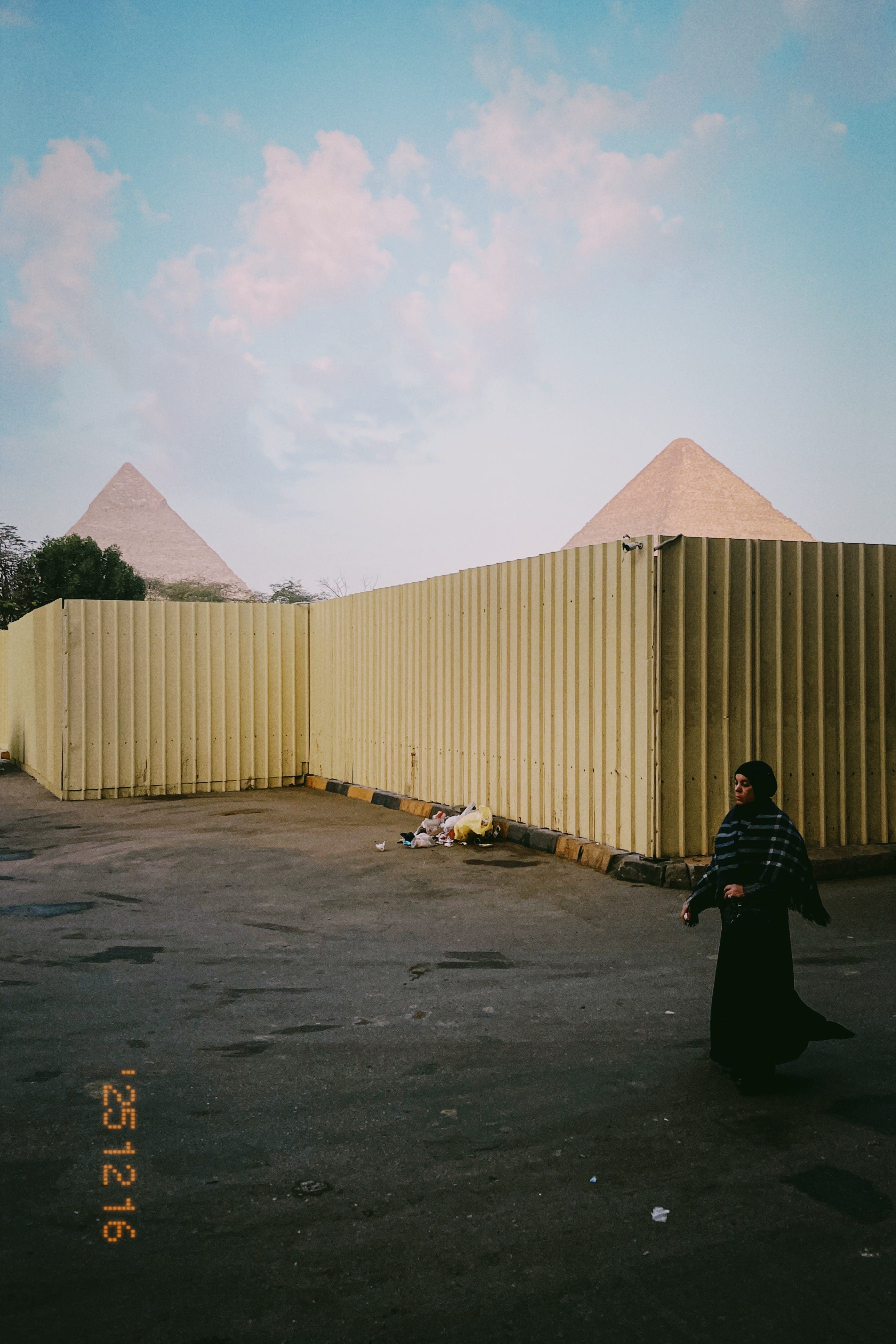
There are two ways through the barrier separating the city of Giza from the pyramids. The first is marked by a long, shallow pavilion of pale stone with “The Great Gate” written on the façade in English, Arabic, and hieroglyphics. Its interior is a museum-like space that offers all the amenities of modern site-visiting, where the daily madness of Egyptian life has been meticulously designed out of existence.
There are touchscreens and QR codes and ads for Nestlé products. “Man fears time, but time fears the pyramids” is emblazoned across a wall, framed as an ancient proverb but likely authored by the marketing department at Orascom Investment Holding, whose giant logotype is likewise emblazoned across a wall.
Additional signage invites visitors to enjoy the elevated dining experience at EL&N, “London’s most Instagrammable café.” In the words of one British journalist, the opening of the Great Gate, last April, had finally made the pyramids fit for the modern world.
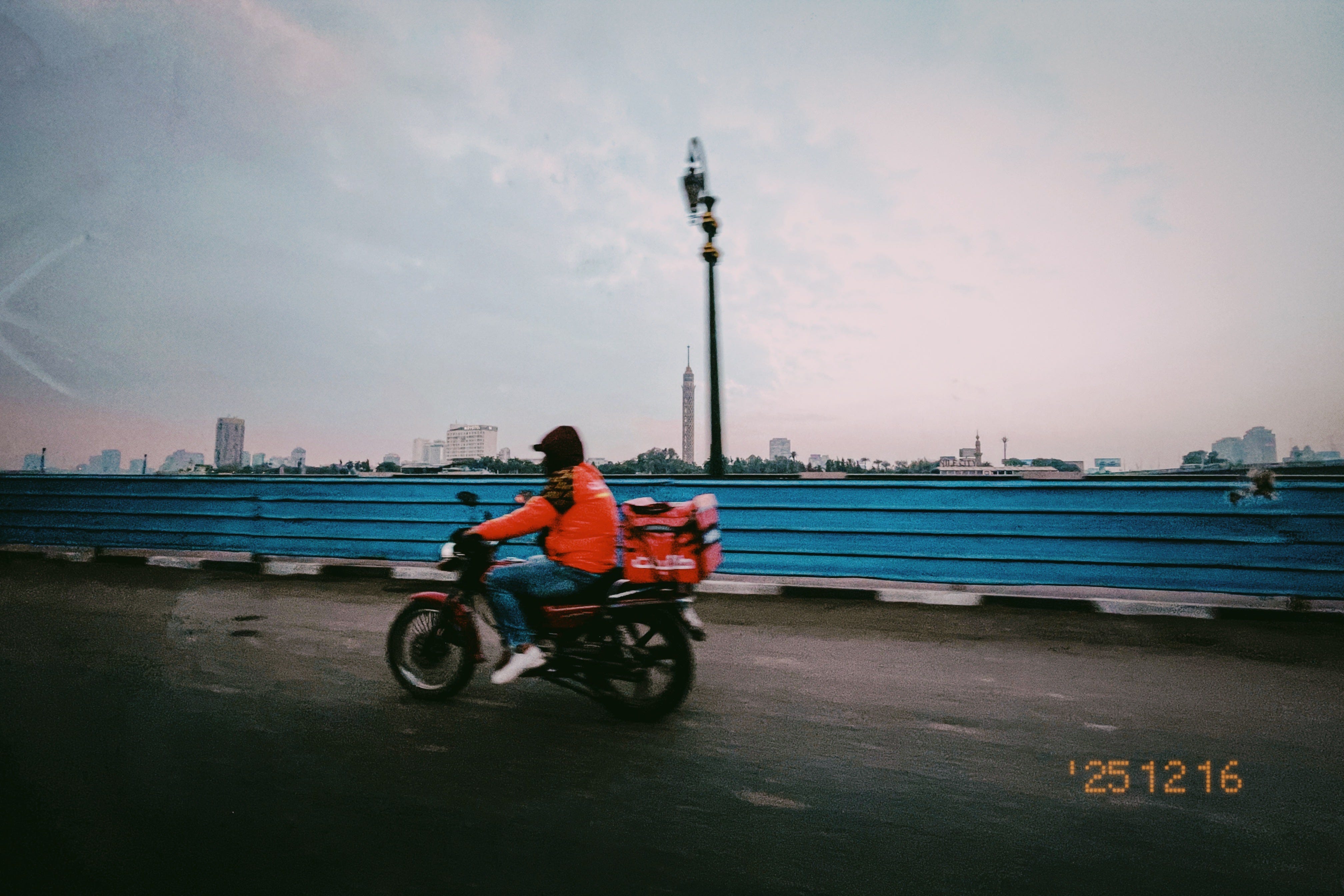
I was dropped off at the other way in. Stepping from the cab, I was instantly met with the discomforts that had long defined the pre–Great Gate visitor experience. Camel stink – slightly sour and ammonia-like – filled the air; crowds of men tried to swindle me; mangy dogs nosed at my ankles. I followed a trail of A4 sheets with “tickets” printed on them, which led me to an iron-barred window. I told the man what I wanted, slid my cash through a narrow slot, and got a receipt. It felt like betting on a horse.
Next, I followed a sheet-metal fence to an opening with a low roof and a turnstile, where two official-looking men waved me through a metal detector. It beeped and flashed but all they said was, “Okay.” This pleased me very much, that entering this sacred site carried no greater sense of occasion than entering a lower league football ground. I am, above all, a person who enjoys modesty where it is least expected.
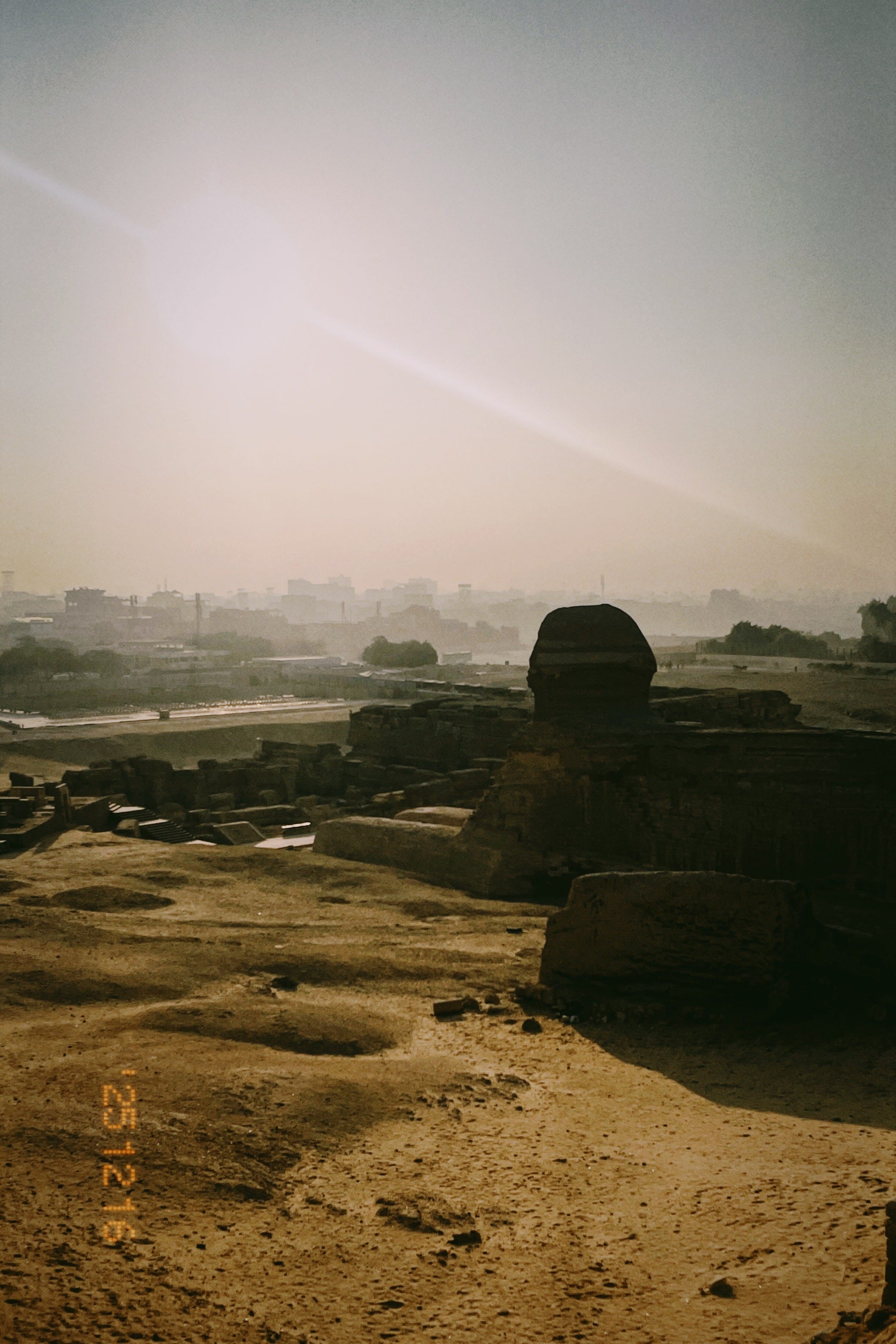
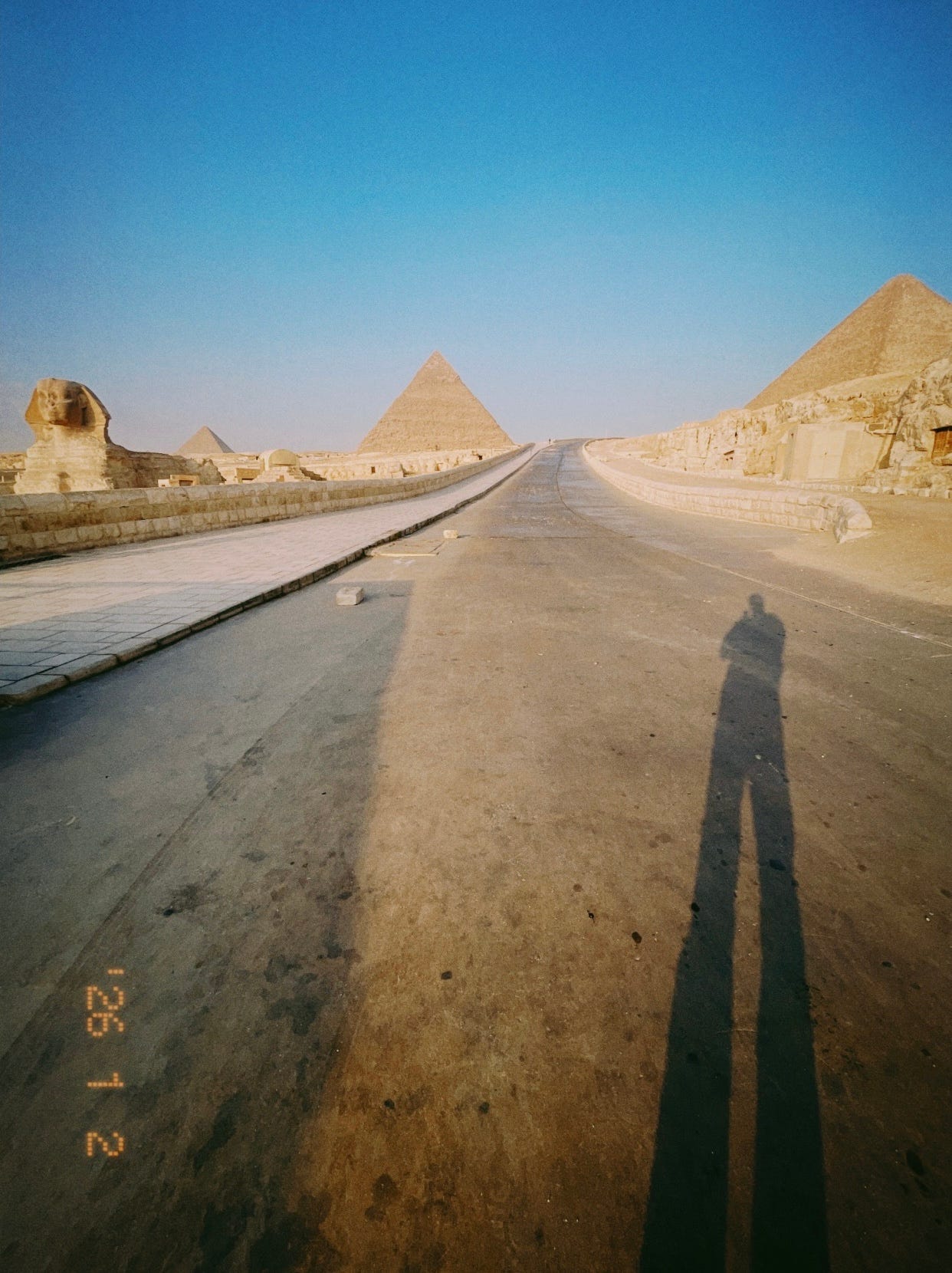
Once through the gate, I was on an empty road that rose gently toward the pyramids. There was no one else around. The morning sun crept across the plateau, brushing first the tips of the ancient prisms, then, nearer sea-level and immediately to my left, stripping the Great Sphinx of its shadow. Its face startled me. It was like I’d never seen it before. Perhaps I hadn’t, not really. The Sphinx, like Rodin’s Thinker, is a posture piece, famous, in this case, for its repose of eternal watchfulness.
I walked and kept walking, my mind bursting with pointless hypotheticals, like whether I could sooner learn ancient Egyptian or grab a wasp out of the air with chopsticks, until I came to a stop, rigid with awe. The road was still empty; I had a completely unpeopled view of the pyramids. A shiver ran from my tailbone to the top of my head. It wasn’t that I was seeing something spectacular. It was that this was the last place on earth I should be seeing it alone. The aloneness, that’s what was spine-tingling. I am not possessive, but for a moment I let myself believe all this was here just for me.
Are the pyramids amazing? I am the wrong person to ask. I often fail to feel the amazement others feel when they’re in an amazing place. One trick is to ask myself what would amaze me about this, if it amazed me. But then the question only confronts me with the fact of the exercise, adding to the moment a needless and self-inflicted sense of futility. I remember leaving places like the Acropolis and the Colosseum of Rome more or less unaffected and wondering what was wrong with me. Only recently have I made peace with it.
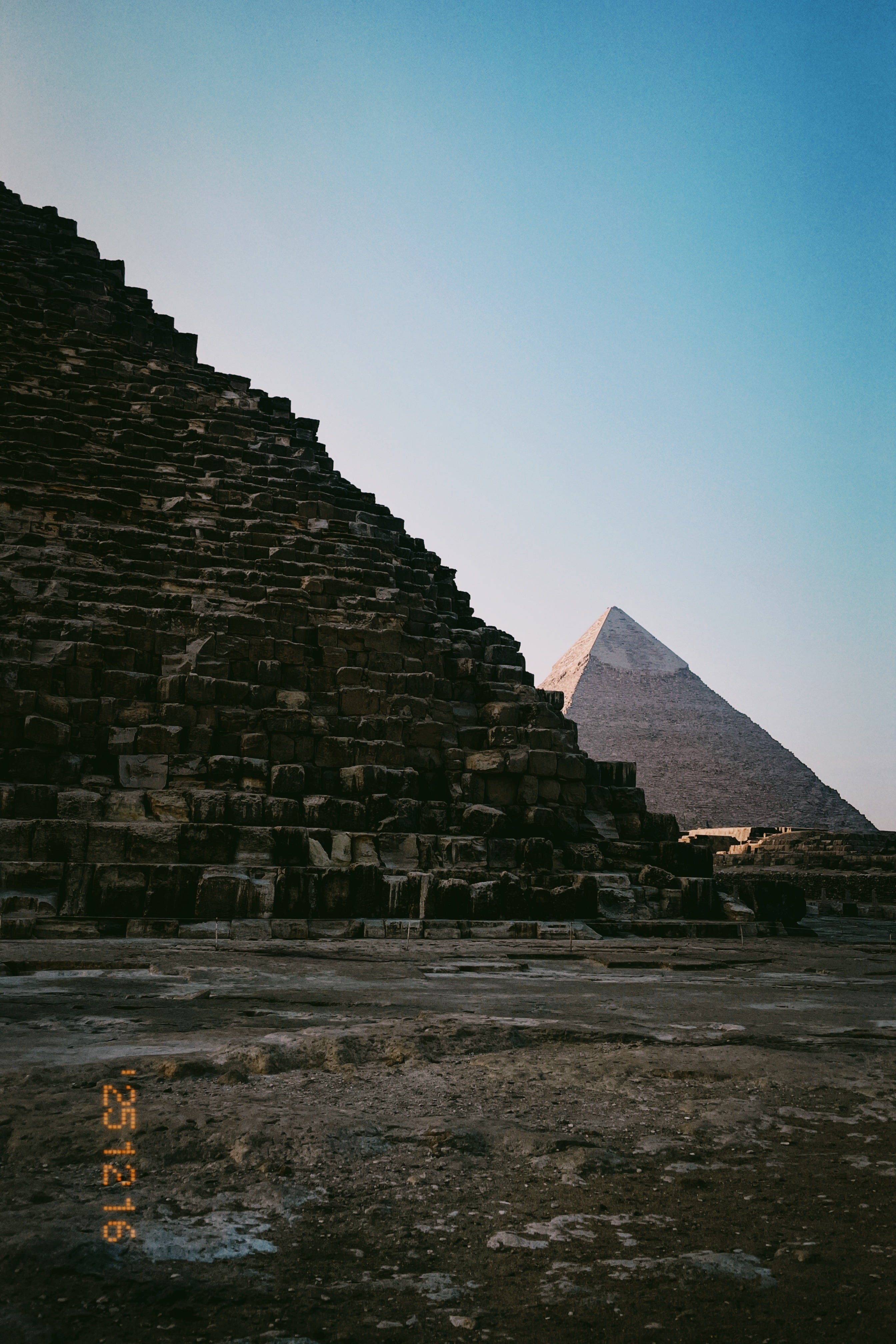
But something did amaze me about the pyramids. It was their plainness. Most people cannot see it. They know too much. Of course, it’s important to know things, why they are and how they happened. But not always.
In fact, there is so much to know about the pyramids that I chose to know nothing, so that when I saw them, there was nothing to distract from their material reality. What’s impressive is the sheer amount of stone, the great upheaval of all that bedrock and the air of permanence that pervades its brutal triangularity. It makes the surrounding city seem utterly makeshift. There is no need to look long. The first glimpse reveals as much as is ever possible to take in.
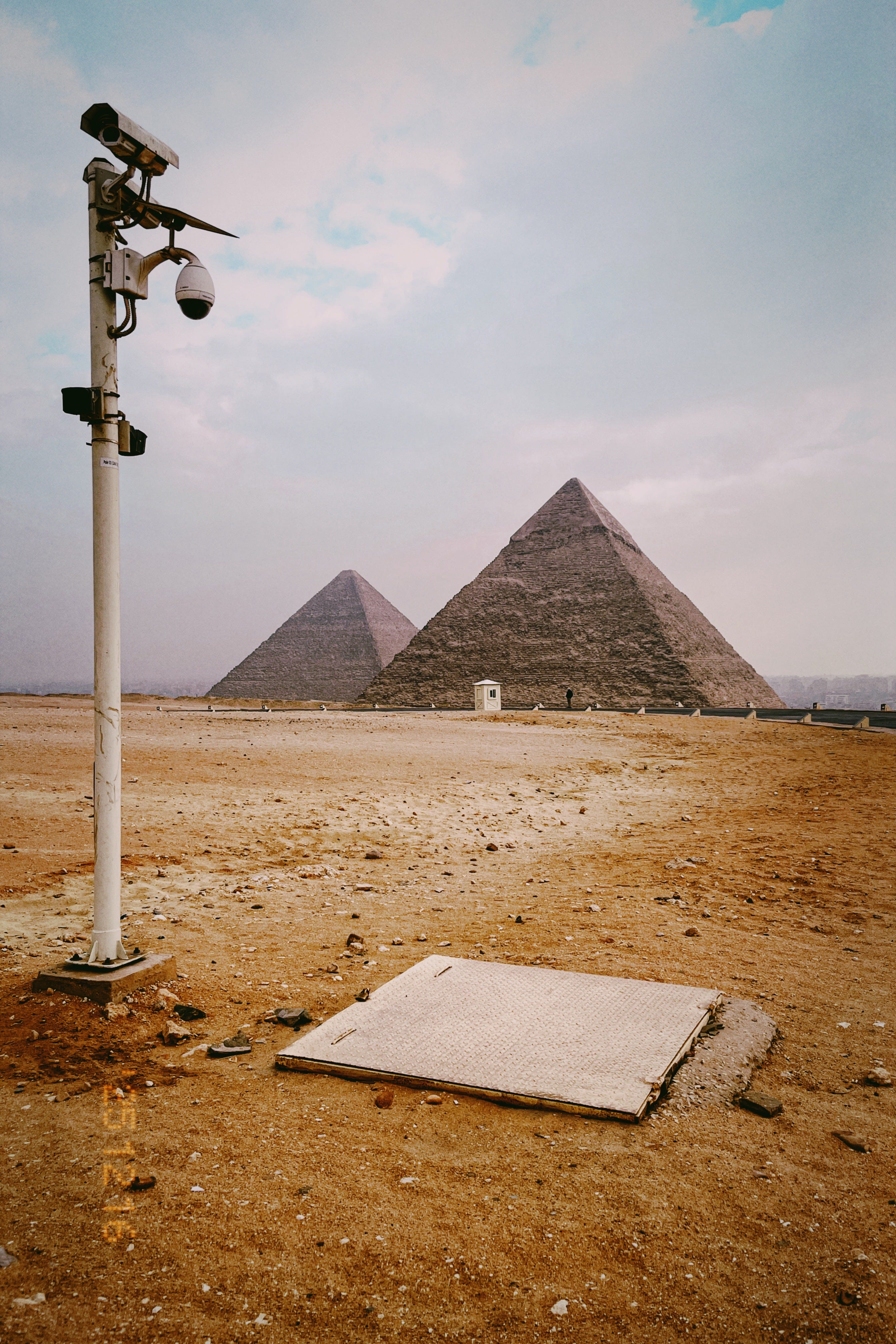
Yes, sometimes amazement demands arriving at the scene like a dumbass—at the wrong gate, with no knowledge of the past. Ignorance preserves a kind of appreciation unavailable to the well-informed. "You get to be clueless in a new place only briefly,” wrote Peter Schjeldahl. “Don’t waste the chance to have truths, great and small, burst upon you.”
Indeed, the link between the Latin stupidus and the word ‘stupefy’ is no accident. Both speak to being rendered numb, overwhelmed, or unable to process what’s in front of you. Which was exactly how I felt, standing dumbstruck at the pyramids. Then I said, or perhaps some other voice said it for me, ‘They’re there. That’s it. That’s the whole thing’.

Your writing, as always, is a joy. Please keep seeing things, so we can keep reading about them! This piece made me think of Dave Egger’s short story “Another”, about a man alone at the pyramids. Highly recommend!
I also fail to be astonished at astonishing places. And I also choose, quite often, not to know. Just to witness. Just to see. Just to experience it for myself, head empty, eyes open. I wonder if they are connected? Often I am more astonished and curious after the fact, digging into research and stories to illuminate what I just saw. Also, these photos are incredible 🖤